From Clueless to Connected: How Map Apps Quietly Transformed Our Family Trips
You know that moment when someone calls, 'Are you there yet?' and no one actually knows? We’ve all been there—driving in circles, kids asking 'Why can’t we just get there?', and parents stressing over directions. But lately, something’s changed. Without fanfare, navigation apps have quietly become our family’s co-pilot, not just guiding roads, but keeping us calm, close, and on track—literally and emotionally. It’s not magic, but it feels like it. The tension in the car has eased, the questions have softened, and somehow, we’re all a little more present. That little blue dot? It’s doing more than showing location—it’s helping us show up for each other.
The Old Way: Chaos Before the Calm
Remember the days before smartphones, when a family trip meant unfolding a giant paper map across the dashboard, only for it to snap shut the second a breeze came through the window? I do. I remember sitting in the back seat of our old minivan, watching my dad squint at the map while my mom repeated, 'Turn left at the gas station with the red roof—wait, was it blue?' The kids were already whining, 'Are we lost?' before we’d even left the neighborhood. There was no real way to know where we were, only best guesses and hopeful turns that often led to more frustration.
That uncertainty wasn’t just about geography—it seeped into our moods. One wrong turn could spiral into a full family argument. Someone would say, 'I told you to turn two exits back,' and suddenly, the whole car felt heavier. The drive itself became something to endure, not enjoy. We’d arrive at our destination—whether it was a relative’s house, a vacation rental, or a theme park—already tired, already frayed. The journey had drained us before the fun even began.
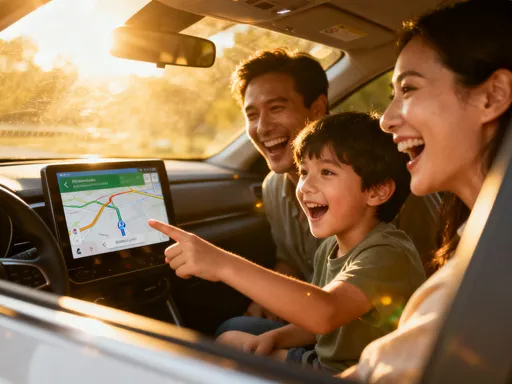
What we didn’t realize then was that we weren’t just navigating roads—we were navigating stress. And the real cost wasn’t wasted time or extra miles. It was the lost moments: the jokes that weren’t made, the songs that weren’t sung, the quiet conversations that got buried under anxiety. Today, when I look back, I see how much emotional energy we spent just trying to find our way. Now, when I watch my own kids point excitedly at a phone screen saying, 'Look, we’re almost there!' I realize how much calmer our family trips have become. The difference isn’t just in the technology—it’s in the peace it brings.
Enter the App: More Than Just a Map
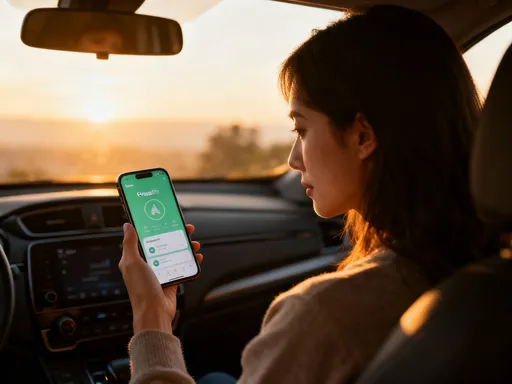
When I first downloaded a navigation app, I thought it was just for finding new coffee shops or avoiding traffic after work. I had no idea it would become one of the most important tools in our family life. It wasn’t an overnight change—more like a slow realization that the app wasn’t just helping me drive. It was helping me parent, helping us connect, and helping us breathe easier on the road.
Think about it: that calm voice saying, 'In 500 feet, turn right'—it’s not just giving directions. It’s taking the pressure off. No more frantic glances at street signs, no more second-guessing. And the real-time traffic updates? They’re like having a personal travel advisor whispering, 'Skip that exit, there’s a backup.' I remember one Saturday when we were heading to a birthday party, and the app rerouted us around a fender bender on the highway. Without it, we would’ve been stuck, late, and already in a bad mood. Instead, we arrived relaxed, laughing, and with time to spare. The kids even had energy for the bounce house.
What’s really changed is the mental load. Before, someone—usually me—had to be 'on' the whole time, mentally tracking every turn, every exit, every possible wrong move. Now, that burden is shared with a tool that never gets tired, never argues, and never says, 'I told you so.' It’s like having a patient, knowledgeable friend in the front seat, one who knows the way and keeps everyone calm. And honestly? The whole family listens to it more than they ever listened to me. There’s something about a neutral voice that cuts through the noise. No emotions, no blame—just clear, simple guidance. That small shift has made a big difference in how we travel together.
Sharing the Journey: Everyone’s in the Loop
One of the most unexpected joys of using navigation apps has been how they’ve changed the way we communicate—especially when we’re on the move. I used to dread the constant 'Where are you?' texts when meeting family or friends. Now, I don’t need to answer them. I just share my location, and within seconds, everyone knows exactly where I am. No more circling the parking lot, no more shouting across the street, 'I’m by the fountain!'—which, by the way, there’s never just one fountain.
It’s especially helpful with my teenage daughter. When she started driving, I’ll admit, I worried. But now, when she’s coming home from practice or a friend’s house, I can see her progress on the map. Not in a 'checking up on her' way, but in a 'I can relax because I know she’s okay' way. She even shares her location with her younger brother, so he knows when to expect her and can run to the door when she pulls in. It’s become a quiet way we stay connected, even when we’re apart.
And it’s not just for driving. When my mom visits from out of town, she shares her ride’s location with us so we know when to warm up dinner. When my sister’s family comes for the weekend, we track their progress and time our walk to the trailhead perfectly. There’s a comfort in that shared awareness—like we’re all part of the same story, moving through space together. The app doesn’t replace conversation, but it removes the friction. We don’t have to call, we don’t have to guess. We just know. And in a world that often feels too busy, too loud, too uncertain, that small certainty means everything.
Progress Tracking: The Little Things That Build Trust
Have you ever watched a child stare at a screen, completely mesmerized by a tiny moving dot? I have. My youngest used to press his nose against the phone, eyes wide, as he watched our little blue icon crawl down the digital highway toward the amusement park. 'We’re getting closer!' he’d shout every few minutes. And each time, the rest of us would smile. Because that simple animation—so small, so ordinary—was building something powerful: anticipation, patience, and trust.
For kids, that progress bar or moving dot isn’t just data. It’s a promise. It says, 'You’re on your way. You’ll get there. And it won’t take forever.' That kind of visual reassurance can turn a restless back seat into a space of calm excitement. No more 'Are we there yet?' every five minutes—just quiet focus on the screen, counting down the miles. It’s amazing how something so small can reduce so much stress.
But it’s not just for kids. As a parent, being able to see exactly how close we are to our destination helps me plan the next steps without guessing. If we’re ten minutes away, I can text the host, 'We’re almost there!' If we’re still twenty, I can suggest a quick bathroom stop. That predictability lets me be more present, more relaxed, and more in control—without having to be 'the boss' of the trip. It’s like the app handles the logistics, so I can handle the love. And honestly, isn’t that what we all want? To spend less energy on the details and more on the people we’re with?
There’s also a quiet lesson in timing and patience that comes from watching progress unfold. My kids have learned that travel takes time, but also that time can be measured, managed, and even enjoyed. They’ve learned to trust the process—not just the app, but the journey itself. And that’s a kind of emotional intelligence that doesn’t come from screens alone. It comes from feeling safe, seen, and supported every step of the way.
Teaching Kids Independence, One Trip at a Time
One of the most surprising benefits of using navigation apps has been how they’ve helped my older kids grow into more responsible, confident young people. I remember the first time I let my 12-year-old take charge of the directions on a trip to a new town. She held the phone like it was a treasure map, eyes scanning the screen, voice steady as she announced, 'Mom, turn left in 200 feet.' I followed her lead, and when we arrived exactly where we needed to be, her face lit up with pride. 'I did it!' she said. And she had.
That moment was about more than just directions. It was about trust. It was about giving her a real role in the family journey—literally and figuratively. Since then, we’ve made it a habit. The oldest gets to navigate on long drives. They learn to read exits, estimate travel time, and make decisions when the app suggests an alternate route. It’s low-pressure, but it’s real responsibility. And they love it.
What I didn’t expect was how much they’d learn beyond the road. They’ve picked up a sense of direction, yes, but also problem-solving, communication, and even a bit of leadership. When the app reroutes us, they discuss the options. When we’re running late, they help adjust the plan. It’s become a kind of quiet classroom on wheels, where the lessons aren’t about grades, but about life.
And let’s be honest—kids pay more attention to a phone than to a lecture. By turning navigation into a shared task, we’re teaching them skills they’ll use forever: how to plan, how to adapt, how to stay calm under pressure. The app isn’t replacing parenting. It’s giving us new ways to guide, support, and empower our kids. And that’s a win no map could ever show.
When Tech Meets Tradition: New Rituals on the Road
Some people worry that technology is killing the old ways—the car games, the conversations, the simple act of looking out the window. But in our family, it’s been the opposite. Technology hasn’t replaced our traditions. It’s helped us create new ones. Instead of 'I spy' or the license plate game, we now have 'How close is the snack stop?' or 'Who gets to pick the next music playlist when we hit the next exit?' The screen has become part of the fun, not a distraction from it.
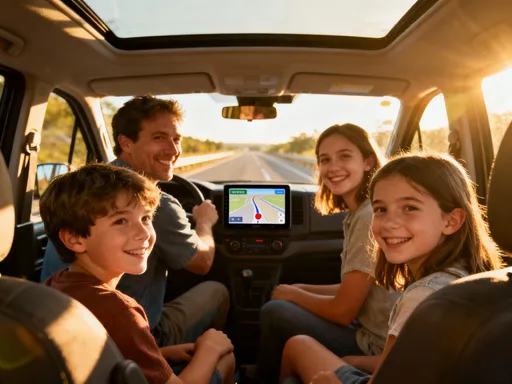
We’ve started voting on route stops—coffee for Mom, a quick park break for the kids, a photo op at a scenic overlook the app suggests. The shared map has become a kind of family dashboard, showing not just where we are, but what we care about. And when we see a detour, we don’t groan—we treat it like an adventure. 'What’s down this road?' someone will ask. And sometimes, we take it, just to see.
The truth is, connection isn’t lost when we use technology. It’s just expressed differently. We’re still talking, still laughing, still making memories. But now, we’re doing it with less stress and more ease. The app handles the logistics, so we can focus on the moments that matter. We’re not glued to our screens—we’re using them to stay present, to stay together, to stay on track. And in a world that often pulls us in different directions, that’s a gift.
The Quiet Revolution: Calmer Roads, Closer Families
When I think about how much our family trips have changed, it’s not the speed or the accuracy that moves me most. It’s the calm. It’s the way we arrive at our destination not frazzled, but smiling. It’s the way my kids now say, 'Let’s go on a drive!' instead of dreading the car ride. It’s the way my husband and I can actually talk, or just sit in comfortable silence, because we’re not both trying to read a map or remember the route.
The quiet revolution isn’t about the tech itself. It’s about what the tech makes possible: more patience, more presence, more peace. That little blue dot isn’t just showing us where we are. It’s helping us find our way back to each other. It’s not flashy or loud, but its impact is deep. It’s in the shared glances, the spontaneous songs, the deep breaths we didn’t have to hold.
And maybe, just maybe, that’s the real magic of modern life—not that everything is faster or easier, but that we’ve found small, smart ways to protect what matters most: our time, our energy, our connection. The app doesn’t love us. But it helps us love each other a little better by taking the stress out of the journey.
So the next time you see that blue dot moving steadily down the digital road, don’t just see technology. See the calm it brings. See the shared smiles, the relaxed shoulders, the family arriving together—not just in place, but in spirit. Because sometimes, the simplest tools make the biggest difference. And in our family, that little app isn’t just a navigator. It’s a quiet keeper of peace, a silent partner in joy, and a small but steady reminder that we’re all going somewhere—together.