From Fragrance Chaos to Calm Control: How Smart Scent Finally Fits My Life
You know that moment when you walk into your home and something just feels off? Maybe the air is stale, or a random candle scent clashes with last night’s dinner. For years, I treated fragrance like an afterthought—until I realized it shapes how I feel, focus, and unwind. With smart scent technology, I stopped guessing and started living with intention. It’s not about luxury; it’s about creating a home that truly supports me. And honestly, I didn’t expect a little device that quietly releases scent to change how I experience my days. But it has—gently, consistently, and in ways I didn’t see coming.
The Scented Struggle: When Aromas Work Against You
Let’s be real—most of us don’t plan our home’s scent. We light a candle because it’s Friday night, spray an air freshener when the dog comes in from the rain, or leave a diffuser running too long until the smell gives us a headache. I used to think, "Well, at least it doesn’t smell like laundry day," but that wasn’t really creating a space I wanted to live in. More often than not, the scents in my house felt random, mismatched, or just plain overwhelming. I’d light a vanilla candle in the evening, only to walk into the kitchen and smell last night’s pasta sauce still clinging to the air. The clash wasn’t dramatic, but it was jarring—like background noise you can’t quite ignore.
And then there were the times I forgot altogether. I’d come home after a long day, emotionally drained and mentally foggy, only to be greeted by that flat, lifeless smell of a house that’s just… been sitting there. No warmth, no welcome. I’d think, "I should light something," but by then, I was already sinking into the couch, too tired to get up. It wasn’t just about smell—it was about energy. The right scent can lift your mood, help you focus, or ease you into rest. But when you’re juggling work, family, meals, and laundry, who has the bandwidth to manage fragrance with intention? I certainly didn’t. So instead of supporting me, my scent routine was just another thing I was failing at—quietly adding to the mental load instead of relieving it.
What I didn’t realize then was that our sense of smell is deeply tied to how we experience comfort, safety, and even time. A familiar scent can make you feel like you’re exactly where you’re supposed to be. But when scents are inconsistent or conflicting, it creates a subtle kind of stress—like your environment is out of sync with your rhythm. I started to notice how, on days when the house smelled chaotic, I felt more scattered too. It wasn’t the scent causing my stress, but it wasn’t helping me recover from it either. That’s when I began wondering: what if fragrance wasn’t something I had to remember? What if it could just… work for me?
Meeting My Smart Scent Assistant: A Low-Key Game Changer
I’ll admit, I wasn’t looking for a "smart" solution. The word itself made me think of complicated apps, blinking lights, and devices that needed constant updates. I didn’t want another gadget to manage. But then I saw a small, simple-looking diffuser at a friend’s house—sleek, quiet, and blending into the shelf like it belonged there. She mentioned it turned on in the morning with a light citrus blend and shifted to something warm and woodsy by evening. "I barely think about it," she said. "It just makes the house feel… calmer." That stuck with me.
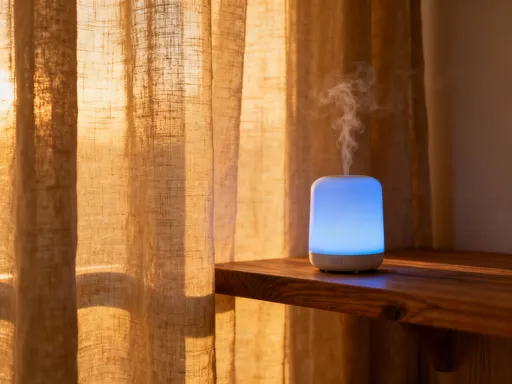
So I tried one. I placed it in the living area, where the whole house flows through—the spot where I drop my bag, where the kids kick off their shoes, where we gather in the evenings. I chose a neutral wood finish so it didn’t scream "tech," and I set it up in less than ten minutes. No complex wiring, no confusing settings. Just plug it in, add the scent capsule, and let it go. The first morning, I woke up to the soft, bright scent of grapefruit and bergamot drifting through the air. Not overpowering. Not artificial. Just… awake. And for the first time in a long time, I didn’t have to do anything to make my home feel good.
That was the shift. It wasn’t about fancy features or high-tech promises. It was about relief. The kind that comes when one small thing—something you used to forget, overdo, or stress about—just starts working on its own. I didn’t have to remember to light a candle. I didn’t have to adjust a diffuser. The house just… smelled like it was ready for the day. And that made me feel ready too. It wasn’t magic. It was design—thoughtful, quiet, and built for real life. I realized I didn’t need more control. I needed less effort.
How It Learned Me: The Quiet Intelligence Behind the Scenes
Here’s what surprised me: I didn’t have to teach it much. I expected to spend weeks tweaking schedules and adjusting intensity, but the device started making sense of my routine almost immediately. It uses simple sensors—nothing invasive—to detect patterns. Time of day, room activity, even changes in natural light. It doesn’t track me; it notices. And over time, it began to anticipate.
Mornings, when the sun hits the living room around 7 a.m., it releases a light citrus blend—just enough to wake up the space without shocking the system. On weekends, when we sleep in, it waits. In the evening, as the light fades and the house settles, it shifts to a warm vanilla and sandalwood blend. Not heavy. Not sleepy. Just grounding. I didn’t program this. It learned it by observing. And that’s when it stopped feeling like a gadget and started feeling like a part of the home.
One of the most comforting moments was when I had friends over for dinner. I didn’t change anything. But as the evening deepened and the conversation warmed, the scent deepened too—subtly shifting to something richer, more inviting. No one said anything, but several guests commented on how "cozy" the house felt. That’s when it hit me: this wasn’t about controlling the environment. It was about enhancing it. The technology wasn’t drawing attention to itself. It was supporting the mood, the moment, the connection. It was like having a quiet host who knows exactly when to offer a fresh drink or dim the lights—except it was doing it with scent.
And the best part? I didn’t have to think about it. No app notifications. No settings to adjust. It just worked, quietly and consistently, like a well-trained assistant who knows your rhythm better than you do. That’s the kind of tech I can get behind—not flashy, not demanding, but deeply attuned to the way I actually live.
Making It Stick: Turning Tech Into Daily Ritual
We’ve all tried gadgets that promise to make life easier but end up collecting dust. I had a smart water bottle that blinked at me guiltily every hour. A meditation app I opened once. A fitness tracker I wore for three days. The difference with this? It didn’t ask for anything from me. It didn’t demand attention. It didn’t make me feel like I was failing if I didn’t "use it right." Instead, it met me where I was—tired, busy, forgetful—and worked around my imperfections.
The design plays a big role. It’s in the same spot every day, so I don’t have to hunt for it. The scent capsules last for weeks, so I’m not constantly refilling. And the intensity is gentle—never too strong, never too weak. But what really made it stick was the small, thoughtful interactions. Like when I’m on a Zoom call, and I tap the device to pause the scent for 30 minutes. Or when I come home after a rough day, and I press the button to boost the fragrance—just a little extra warmth to help me reset. These tiny moments of control, when I want them, make me feel like I’m in charge—even though most of the time, I’m not doing anything at all.
And that’s the secret: it supports habit without demanding perfection. I don’t have to remember to use it. It remembers for me. It shows up when I need it—morning after morning, evening after evening—without judgment or pressure. Over time, those consistent moments built trust. I began to rely on it not because it was smart, but because it was reliable. And reliability, in a world full of chaos, is everything.
More Than Smell: How Scent Shapes Mood and Memory
I used to think of scent as decoration—something nice, but not essential. But the more I lived with intentional fragrance, the more I realized how deeply it shapes our inner world. Smell is the only sense directly linked to the limbic system, the part of the brain that handles emotion and memory. That’s why a certain perfume can take you back to your grandmother’s kitchen, or the smell of rain can make you feel suddenly calm. Scent isn’t background. It’s emotional architecture.
With smart scent, I’ve started building that architecture on purpose. Mornings now begin with clarity, not chaos. The light citrus doesn’t just smell fresh—it signals to my brain that it’s time to wake up, focus, and move. I’ve noticed I’m less groggy, more present. Even my kids respond to it. My daughter says, "I know it’s time to get ready when I smell that grapefruit." That consistency creates rhythm. And rhythm creates calm.
In the evenings, the shift to warm vanilla and sandalwood isn’t just cozy—it’s a cue. It tells my body it’s time to slow down, to let go of the day. I don’t have to force relaxation. The scent helps me slide into it. And on tough days, when everything feels heavy, that familiar warmth wraps around me like a blanket. It doesn’t fix the problem, but it makes the space feel safer, softer, more held.
What I love most is how it’s become part of our family’s emotional language. My son associates the evening scent with storytime. My husband says it makes him feel "at home" the moment he walks in. These aren’t big moments, but they add up. Over time, the house hasn’t just smelled better—it’s felt more like a sanctuary. And that’s worth more than I ever expected.
Connecting Us, Not Devices: Scent as Shared Experience
One of my biggest fears about smart tech was that it would make our home feel colder, more mechanical. But the opposite happened. Because the scent is consistent, shared, and tied to our routines, it’s become a kind of invisible thread that connects us. We don’t talk about it much, but we all notice it. And that shared awareness—"Oh, it’s that cozy smell again"—creates a quiet kind of togetherness.
On weekends, I use a special blend—something with cinnamon and orange—that we’ve started to associate with slow mornings and pancakes. It’s not just a scent. It’s a signal that today is different. The kids smile when they smell it. My husband says, "It feels like a real weekend." We don’t have to announce it. The house tells us.
And when we have guests, the scent welcomes them in a way words can’t. It’s not about impressing anyone. It’s about creating a space where people feel comfortable, seen, and at ease. I’ve had friends say, "I don’t know what it is, but your house just feels… good." That’s the power of shared atmosphere. It’s not about control. It’s about harmony. The right scent at the right time doesn’t isolate us with our devices. It brings us into the moment, together, without a word needed.
In a world where so much of our connection happens through screens, it’s comforting to have something that grounds us in the physical, in the shared breath of our home. Scent doesn’t replace conversation. It makes space for it.
A Home That Breathes With You: The Quiet Power of Effortless Living
Looking back, I didn’t set out to revolutionize my home. I just wanted to stop forgetting to light a candle. But what I found was something deeper—a home that feels alive, responsive, and quietly supportive. It’s not perfect. Some days the scent is a little too strong, or I forget to replace the capsule on time. But those moments don’t ruin the experience. They just remind me that this isn’t about control. It’s about care.
The real win isn’t that my house smells good. It’s that I feel more at ease in it. That I come home and feel welcomed, not overwhelmed. That my kids know when it’s time to wind down, not because I yell it, but because the air tells them. That my husband walks in after work and takes a deep breath like he’s finally home. These are the small, quiet victories that add up to a life that feels more intentional, more grounded, more mine.
Smart scent didn’t change my life in a dramatic way. It changed it in a hundred tiny ones. It gave me back a little mental space. It made my home feel more like a partner than a project. And in a world that never slows down, that’s everything. I used to think technology was about doing more. Now I know it can be about feeling more—present, connected, at peace. And sometimes, the most powerful tech isn’t the one that shouts. It’s the one that whispers, gently, in the background, helping your home breathe with you.