What If Your Appliances Could Finally Understand You?
Have you ever stood in your kitchen, juggling a crying baby and dinner prep, only to realize your smart oven won’t turn on because the app froze—again? We’ve all been there. Technology promised to make life easier, but too often, it adds more steps, not fewer. What if your devices could actually work together, seamlessly, without constant troubleshooting? This isn’t about fancy gadgets—it’s about real life. Let’s talk about how to make your home truly work for you, not the other way around. Because when your tech finally syncs up, it’s not just convenient—it feels like someone finally listened.
The Morning That Broke Me: When Smart Devices Feel Dumb
It started like any other Tuesday. My alarm didn’t go off because my phone disconnected from the bedroom speaker overnight. By the time I woke up, the kids were already arguing over cereal, the dog needed a walk, and the coffee maker—supposedly programmed to brew at 6:45 a.m.—was cold and silent. I tapped the app, refreshed, restarted, and finally gave up, pouring myself a sad cup of instant coffee while the thermostat kicked on full blast, blasting heat into a house no one even wanted warm yet. I stood there, spoon in hand, toddler on hip, wondering why so many devices meant so little help.
This wasn’t a one-time glitch. It was the tenth time that month a device had failed in a way that felt avoidable. And I know I’m not alone. So many of us have invested in smart homes hoping for peace, only to find ourselves more frustrated than ever. We bought these tools to simplify our lives, but instead, we’re constantly troubleshooting, resetting, and explaining to our kids why the lights won’t turn on even though we “told Alexa.” The emotional toll is real. It’s not just about inconvenience—it’s about broken trust. We start to doubt whether we’re doing it wrong, whether we’re too slow to learn, too disorganized. But here’s the truth: it’s not you. It’s the way these devices are set up—or worse, not set up at all.
Think of it like this: you’ve invited a team of helpers into your home, but none of them speak the same language. One listens to voice commands, another needs an app, a third only works if the Wi-Fi signal is just right. They’re not lazy or broken—they’re just not connected in a way that makes sense. And that disconnect? It chips away at your confidence. You begin to wonder if you should just unplug it all and go back to manual switches and timers. But before you do, let’s pause. What if the solution isn’t fewer devices, but better harmony between them?
Why “Smart” Doesn’t Always Mean “Helpful”
We’ve all seen the ads: a woman in yoga pants taps her phone, and the lights dim, the music flows, the oven preheats—all with a smile. It looks effortless. But real life doesn’t run on highlight reels. The problem isn’t the promise of smart technology—it’s the gap between that promise and reality. Most of us assume that once we plug in a smart bulb or pair a speaker, it just… works. But that’s like buying a piano and expecting to play a concerto the first time you sit down. There’s a setup process, an invisible foundation that makes everything else possible.
Let’s talk about that foundation. First, Wi-Fi. Your home network is the nervous system of your smart home. If it’s weak or overloaded, your devices can’t communicate. Imagine trying to have a conversation in a room full of static. That’s what happens when your router is too far from your bedroom sensor or when too many devices crowd the same frequency. Then there’s the issue of compatibility. Not all smart devices speak the same “language.” Some use Bluetooth, others use Wi-Fi, and some require a hub—like a translator—to help them talk. Without that bridge, your coffee maker and your thermostat might as well be in different countries.
And then there’s the software. Yes, software. Those little updates your phone keeps nagging you about? They’re not just for show. They fix bugs, improve security, and sometimes enable new features that let devices work better together. But how many of us ignore them, swiping “remind me later” until the notification disappears? I’ve done it. We all have. But those updates matter. A delayed update can mean your voice assistant doesn’t recognize a new device or that your app crashes when you need it most. The result? Frustration. Delays. That sinking feeling that your home is working against you, not with you.
So when your smart lock fails to unlock as you approach, or your lights flicker for no reason, it’s rarely because the device is faulty. It’s usually because one piece of the puzzle is missing—a stable connection, a compatible hub, a simple update. And once you understand that, you stop blaming yourself. You start seeing the system for what it is: a collection of tools that need care, attention, and a little coordination.
The Hidden Key: Bridging Devices Like a Pro (Without Being One)
Here’s the good news: you don’t need to be a tech genius to fix this. You don’t need certifications or a degree in computer science. What you do need is a clear plan and a few simple habits. The real key to a smart home isn’t more gadgets—it’s connection. It’s making sure your devices can talk to each other, reliably and consistently. And the easiest way to do that? Start with a central hub.
Think of a hub as the conductor of an orchestra. It doesn’t play every instrument, but it makes sure they all come in at the right time. Popular options like Google Home, Apple Home, or Amazon Echo can serve this role. They don’t just respond to voice commands—they connect your devices, translate between different communication types, and keep everything in sync. When you use a hub, you’re not managing ten separate apps. You’re managing one system.
Now, let me tell you what happened in my house. A few months ago, I had five different apps for my lights, thermostat, doorbell, vacuum, and blinds. I was constantly switching between them, and half the time, one wouldn’t respond. I felt like a switchboard operator from the 1950s. Then I decided to reset everything. I bought a Google Nest Hub, connected all my devices to Google Home, and spent one afternoon relabeling each one: “Kitchen Lights,” “Kid’s Room Thermostat,” “Front Door Camera.” Simple, right? But that small act changed everything. Suddenly, I could say, “Hey Google, good morning,” and the lights would turn on, the temperature would adjust, and the news would play—all at once.
Another game-changer? Making sure all my devices were on the 2.4 GHz Wi-Fi band. I know that sounds technical, but it’s not. Most modern routers support two bands: 2.4 GHz and 5 GHz. The 5 GHz is faster, but it doesn’t travel as far and doesn’t penetrate walls well. Smart devices like plugs, sensors, and thermostats work better on 2.4 GHz because they need range, not speed. I didn’t know this for years. I just assumed my basement sensor was faulty when it kept disconnecting. Turns out, it was on the wrong band. A quick change in my router settings, and it’s been rock solid ever since.
And let’s talk about naming. This sounds silly, but it’s powerful. If your devices have weird names like “Device_1234” or “SmartPlug_A7,” your voice assistant won’t recognize them, and you’ll waste time searching for them in apps. Take ten minutes. Rename everything clearly. “Living Room Lamp,” “Backyard Sprinkler,” “Garage Door.” It makes voice control work better and helps everyone in the house use the system without confusion. My teens especially appreciate it. No more yelling, “Which light are you talking about, Mom?”
Making It Stick: Daily Routines That Let Tech Disappear
The magic of a connected home isn’t in the gadgets—it’s in the routines. When your devices work together, they fade into the background. You don’t think about them. You just live. And that’s when you realize how much mental energy you’ve been wasting.
Take our “goodnight” routine. Before we got everything connected, I’d walk through the house like a night watchman: checking locks, turning off lights, adjusting the thermostat, making sure the coffee maker was off. By the time I got to bed, I was too wound up to sleep. Now, I say, “Hey Google, goodnight,” and in seconds, the downstairs lights turn off, the front door locks, the thermostat drops to 68, and the hallway nightlights turn on. It takes one command. No walking, no checking, no stress.
And it’s not just at night. In the morning, my “rise and shine” routine turns on the kitchen lights, starts the coffee maker, reads the day’s weather and calendar, and plays gentle music. My kids know it’s time to get up when they hear the soft piano notes. No yelling. No nagging. Just a gentle nudge from the house itself.
Building these routines doesn’t have to be complicated. Start with one. Pick a moment in your day that feels chaotic—getting out the door, winding down, starting dinner. Then ask: what would make this easier? Could the lights turn on automatically when you enter the kitchen? Could the oven preheat while you’re still unloading the groceries? Most smart platforms let you create these automations in minutes. You don’t need to write code. You just tap a few buttons, choose a trigger (like time, location, or voice), and pick the actions.
The real benefit isn’t the convenience—it’s the mental relief. When you stop having to remember everything, your mind opens up. You have space to think, to breathe, to be present. You’re not multitasking anymore. You’re living. And that, more than any gadget, is what we all really want.
The Family That Connectes Together, Stays Calmer
One of the most surprising benefits of a well-connected home isn’t personal—it’s relational. When tech works smoothly, it reduces tension in the household. No more arguments over who forgot to turn off the lights or why the AC is set to Arctic mode. No more “I thought you were going to lock the door!” moments when you’re already halfway to work.
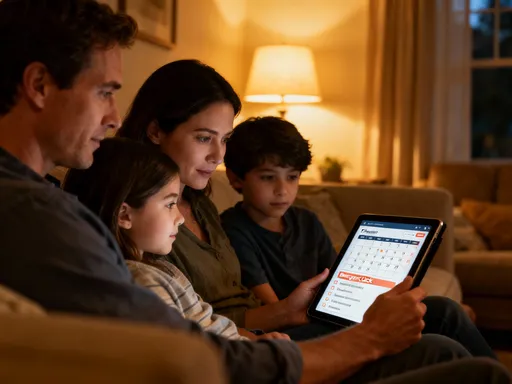
In our home, we set up shared access through Google Home. Each of us—my husband, my teens, even my mom when she visits—has their own profile. That means we can all control the lights, thermostat, and music without stepping on each other’s toes. My daughter can play her study playlist in the living room without affecting the podcast I’m listening to in the kitchen. My son can adjust the temperature in his room without changing the whole house. And if someone tries to do something they shouldn’t—like turn off the security camera—the system sends me a notification.
We also use shared routines. On school mornings, the “leave for school” command turns off all lights, arms the security system, and sends a notification to our phones when the front door locks. It’s become part of our rhythm. The kids don’t fight about it because it’s not about control—it’s about cooperation. The house helps us work together, not against each other.
And let’s talk about music. This might sound small, but it’s huge. Before, we had one speaker in the living room. Whoever got there first controlled the playlist. Now, we have a multi-room audio system. I can play jazz in the kitchen, my husband can listen to news in the study, and the kids can blast pop in their rooms—all at the same time, all managed through one app. No battles over the aux cord. No passive-aggressive volume wars. Just peace.
When your home supports your family instead of complicating it, something shifts. You start to feel like a team. And that sense of unity? It’s priceless.
Beyond Convenience: How Smooth Tech Fuels Personal Peace
Let’s go deeper. Yes, it’s nice to save five minutes in the morning. But the real gift of a connected home isn’t time—it’s energy. Mental energy. Emotional bandwidth. When your environment stops fighting you, you start to feel calmer, clearer, more in control. And that opens the door to things that matter: reading, creating, resting, growing.
I used to come home exhausted, dreading the mental load of managing the house. Now, I walk in to soft lighting, a comfortable temperature, and quiet music. The house greets me like a friend. It doesn’t solve my problems, but it doesn’t add to them. And that small shift has given me space—space to journal, to call a friend, to sit with a cup of tea and just be.
That space has changed me. I’ve started painting again, something I hadn’t done in years. I read more. I sleep better. I’m more patient with my kids. I don’t attribute all of that to my smart home—but I do believe it created the conditions for it. When you’re not constantly putting out fires—literal or digital—you have room to bloom.
This isn’t about luxury. It’s about sustainability. Motherhood, homemaking, caregiving—they’re demanding. They drain you. Anything that gives you back even a little energy is worth investing in. And a well-connected home isn’t a toy. It’s a tool for well-being. It’s a way to protect your peace, guard your time, and honor your need for rest.
I used to think self-care meant spa days or weekend getaways. Now I know it also means a thermostat that adjusts automatically, a lock that secures itself, a routine that runs without me. Because when your home supports you, you can show up more fully—for your family, for your dreams, for yourself.
Start Small, Think Big: Your First Step to a Truly Smart Home
If you’re feeling overwhelmed, I get it. It took me months to get here. But you don’t have to do it all at once. In fact, you shouldn’t. The key is progress, not perfection. Start with one thing. Just one.
Maybe it’s auditing your devices. Write down everything you own: lights, plugs, thermostat, doorbell, speakers. See what’s connected, what’s not, what’s gathering dust. Then pick one routine to build. Maybe it’s a “good morning” scene that turns on the kitchen light and starts the coffee. Or a “leaving the house” command that turns off all lights and locks the door. Test it. Tweak it. Celebrate when it works.
Or maybe your first step is simpler: restart your router. Seriously. So many issues are solved by a simple reboot. Unplug it for 30 seconds, plug it back in, and reconnect your devices one by one. It takes ten minutes and can clear up years of glitches.
Whatever you choose, remember this: your home should serve you, not stress you. Technology isn’t meant to be a chore. It’s meant to be a helper—a quiet partner in your daily life. And when it finally works the way it’s supposed to, it doesn’t just make tasks easier. It makes life softer. Kinder. More yours.
You don’t need a perfect smart home. You need one that understands you. And that starts not with more gadgets, but with better connections. So take that first step. You’ve got this. Your calm, connected home isn’t a dream. It’s a series of small, smart choices—waiting for you to begin.