We used to argue about directions: How a simple map app brought us closer as a family
We used to argue about directions. Getting lost meant stress—raised voices, frustrated sighs, kids whining in the backseat. I’d grip the wheel, my partner silently judging my sense of direction. But one small change flipped it all: we started using a navigation app together. Not just for routes, but as a team tool. Now, my child points out turns with excitement, we discover parks along the way, and road trips feel like shared adventures. It’s not just about getting somewhere—it’s about how we get there, together. And honestly? That shift has changed more than our drives. It’s changed how we listen, how we trust, and how we show up for each other when life throws us off course.
The Backseat Battles That Almost Broke Us
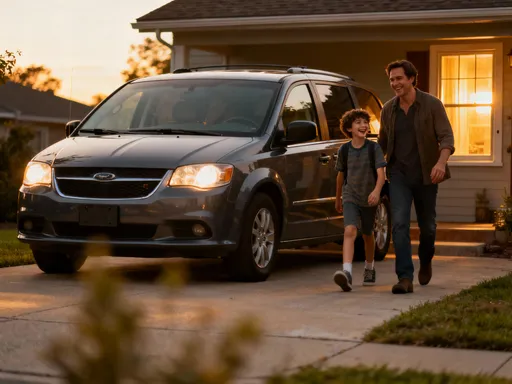
Remember those days when a simple trip to the grocery store could spiral into a full-blown family crisis? I do. We didn’t need a long road trip to feel the tension—just five minutes into a drive, someone would say, “I thought you said we were turning left?” and suddenly, everything would unravel. I’d tense up at the wheel, my voice sharper than I intended. My partner would sigh or mutter something under their breath. And our daughter? She’d go quiet in the back, eyes darting between us, her little body stiff with worry. It wasn’t about the turn. It wasn’t even about being lost. It was about feeling like we were falling apart in slow motion, over something as small as a missed exit.
Looking back, I realize how much of that stress was rooted in pride. I didn’t want to admit I didn’t know the way. I didn’t want to seem unprepared. My partner, on the other hand, just wanted us to get there safely and efficiently. But without realizing it, we turned every drive into a power struggle. Was it my way or the highway? Was I the navigator or weren’t I? The irony is, we both wanted the same thing—peace, connection, a smooth ride—but our approach kept sabotaging it. We weren’t just navigating streets; we were navigating egos, and neither of us was winning.
And the worst part? Our daughter started mirroring it. She began second-guessing herself constantly. “Am I right?” she’d ask after choosing a game or picking a snack. “Did I do it wrong?” It broke my heart. I realized our driving habits were shaping more than our route—they were shaping her sense of security, her confidence. We weren’t just modeling how to get from point A to B. We were modeling how to handle uncertainty, how to respond when things go off track. And frankly, we weren’t setting a great example.
Enter the Map App: From Tool to Teammate
The change didn’t come from a big conversation or a family therapy session. It came from a quiet suggestion one morning: “Why don’t we just use the map app and stop guessing?” My first instinct was resistance. Didn’t that feel like giving up? Like admitting defeat? But I was tired—tired of the tension, tired of the silence after an argument, tired of seeing my daughter flinch at a raised voice. So I said yes. And that simple yes opened a door we didn’t even know was closed.
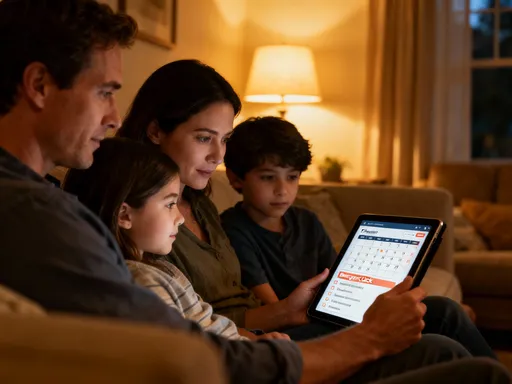
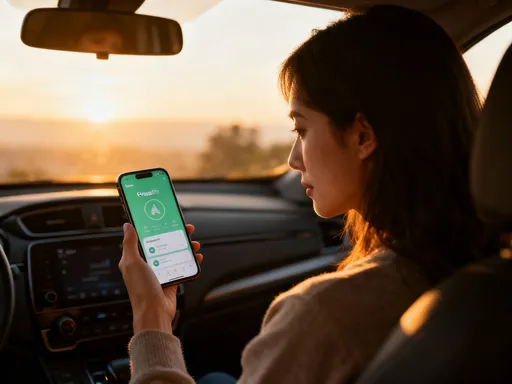
We downloaded a popular, widely used navigation app—nothing fancy, nothing experimental. Just something reliable, with real-time traffic updates, voice guidance, and the ability to reroute smoothly. But the real magic wasn’t in the features. It was in how we started using it. Instead of one of us taking control, we made it a shared responsibility. Before leaving, we’d sit together—sometimes at the kitchen table, sometimes in the car—and look at the route. “Does this look good?” “Any traffic we should avoid?” “Want to add a stop?” It turned a chore into a moment of connection.
The app didn’t judge. It didn’t sigh when we missed a turn. It just said, “Recalculating route,” in a calm, neutral voice, and gave us a new plan. That simple phrase did something powerful: it removed shame. Suddenly, getting lost wasn’t a failure. It was just a detour. My partner stopped giving me that look. I stopped bracing for criticism. We started laughing when the app sent us down a weird alleyway or suggested a route through a quiet neighborhood. We’d say, “Well, this is different!” and roll with it. The app wasn’t replacing us—it was supporting us. And in doing so, it gave us permission to be human.
Turning Navigation Into Connection
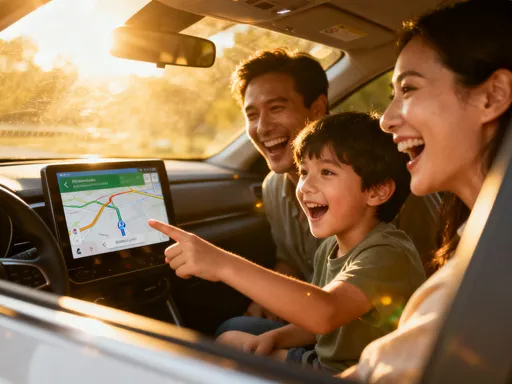
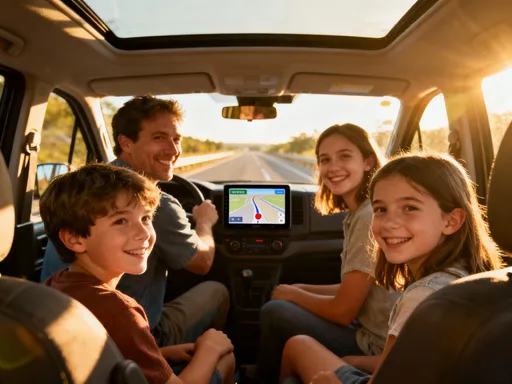
The biggest surprise? Our daughter fell in love with the app. Not just because it talked, but because it gave her a role. We started asking her questions: “Which route looks more fun?” “Do you see any parks nearby?” “Can you tell us when it says ‘turn right’?” At first, she was shy. But soon, she was the official backseat navigator, proudly announcing every turn, even singing along with the voice prompts. “In 500 feet, turn right,” she’d chant, then yell, “THERE IT IS!” when we reached the turn. It became a game. A joyful one.
But it was more than that. It was inclusion. She wasn’t just along for the ride—she was part of the journey. When the app showed a park with a playground icon, she’d beg us to stop. “Look, Mom! A swing set!” And you know what? We started saying yes. We’d pull over, stretch our legs, let her run around for 15 minutes. Those weren’t delays. They were gifts. Moments of spontaneity we never allowed ourselves before, when we were so focused on efficiency and getting there fast.
And something shifted in our conversations. Instead of talking about what went wrong at school or who forgot to pack the homework, we started talking about what we saw. “Did you notice that giant tree?” “That dog looked like a lion!” “I want to come back and try that bakery.” The car became a space for curiosity, not conflict. The app didn’t just guide our wheels—it guided our attention, helping us notice the world and each other again.
Building Trust One Turn at a Time
Here’s what I didn’t expect: using the app together rebuilt trust between my partner and me. Not overnight, and not because of any fancy algorithm. But because it gave us a neutral third party to rely on. When I didn’t know the way, I could say, “Let’s check the app,” instead of pretending I did. When traffic was bad, we could say, “It’s not us—look, there’s an accident up ahead,” instead of blaming each other for poor timing. The app became a buffer, a calm voice in the middle of potential chaos.
But more than that, it taught us to respond differently to mistakes. In the past, a wrong turn felt like a personal failure. Now, it’s just data. The app reroutes, we adjust, and we keep going. That mindset started spilling over into other parts of our lives. When dinner burned, I didn’t snap. I said, “Well, recalculating. Let’s order pizza.” When my partner forgot an appointment, instead of frustration, I said, “No big deal. Let’s reschedule.” We were learning to be kinder, more flexible—not because we suddenly became perfect people, but because we had practiced it, over and over, in the car.
And that’s the thing about small, repeated actions. They shape who we are. Every time we accepted a reroute without complaint, every time we laughed at a strange suggestion, every time we said, “Let’s try it,” we were building a new family culture. One based on teamwork, adaptability, and grace under pressure. The app didn’t fix us. But it gave us a safe space to practice being better—together.
Discovering the Unexpected Joys of Getting There
With the stress of navigation lifted, we started noticing things we’d been too tense to see before. The app began suggesting scenic routes—roads that wound through forests, along rivers, or past historic towns. At first, we ignored them. “Too slow,” we’d say. “We’ll be late.” But one weekend, we decided to try one. No agenda. No rush. Just drive.
And what happened? We saw a covered bridge. We stopped at a farmers market. We ate strawberries so fresh they tasted like sunshine. We took a wrong turn—on purpose—and ended up at a tiny beach where our daughter skipped stones for an hour. That day, we didn’t care about the destination. We were too busy living the journey. And for the first time in years, I felt present. Not thinking about the next task, the next deadline, the next thing I hadn’t done. Just there. With my family. In the moment.
The app started showing us more than routes. It showed us possibilities. Local events. Hidden trails. Pet-friendly cafes. We began using it not just for directions, but for discovery. “Hey, there’s a flower festival this weekend—want to check it out?” “Look, this park has a butterfly garden.” These weren’t grand vacations. They were micro-adventures—small, low-pressure outings that added joy to ordinary weekends. And they became traditions. The ice cream shop after soccer practice. The autumn drive to see the leaves. The holiday lights tour every December. All found, suggested, or made possible by a little screen on the dashboard.
Technology didn’t pull us away from life. It helped us lean into it. It gave us the confidence to wander, to explore, to say yes. And in doing so, it gave us memories—not just photos, but real, lived experiences we still talk about. “Remember when we got lost and found that bookstore?” “That time the app sent us through the tunnel and you screamed?” Laughter, connection, surprise. That’s what we gained.
Practical Tips for Making Your Map Work for Your Family
If you’re thinking, “This sounds nice, but how do I actually make it work?”—I get it. It’s not automatic. It takes intention. But it’s simpler than you think. Here’s what helped us:
First, pick one app and stick with it. Don’t jump between three different ones. Choose a widely used, reliable navigation app that’s known for accuracy and ease of use. Get familiar with it together. Explore the features. You don’t need to be a tech expert—just curious.
Next, customize it for your family. Save your home, school, grandparents’ house, and favorite spots. Create profiles if the app allows, so each person can have their preferences. Turn on voice navigation—so no one has to stare at the screen while driving. That’s a safety win and a connection win. Everyone can look up, not down.
Use the “share ETA” feature. When one of us is running late, we send the link. It reduces anxiety. No more “Where are you?” texts. No more guessing. Everyone feels informed, included, and respected. It’s a small thing that makes a big difference.
Before you drive, take two minutes to review the route together. Make it a ritual. “Okay, we’re going to Aunt Lisa’s. Looks like 45 minutes. Any traffic? Want to stop for coffee?” Turn it into a mini adventure planning session. Let your kids point to the screen (if it’s safe) or use a tablet mount. Give them ownership. Ask, “What would you like to see along the way?”
And finally, stay flexible. If the app suggests a new route, try it. If it shows a park, consider stopping. Let go of the idea that the fastest way is always the best way. Sometimes the longer route is the one that leads to laughter, discovery, and connection.
How Small Tech Changes Create Big Family Shifts
This isn’t really about maps. It’s about mindset. It’s about choosing tools that bring us closer instead of pulling us apart. The app didn’t transform our family because of its algorithms or its voice. It transformed us because we decided to use it differently. We used it not to avoid each other, but to engage. Not to isolate, but to include. Not to control, but to collaborate.
And that’s the secret most tech guides won’t tell you: the best technology doesn’t work in the background. It works in the foreground of your relationships. It becomes part of your rituals, your conversations, your shared language. It’s not about having the latest gadget. It’s about how you use what you already have—to slow down, to listen, to say, “Let’s figure this out together.”
Now, when I hear that calm voice say, “In 500 feet, turn right,” I don’t just think about the road. I think about us. I think about how far we’ve come, not just in miles, but in understanding, in patience, in love. I think about my daughter’s voice shouting the same words, full of pride. I think about my partner, relaxed in the passenger seat, no longer bracing for a wrong turn.
That quiet voice isn’t just guiding our car. It’s reminding us to turn toward each other. To stay present. To embrace the detours. Because sometimes, the best moments aren’t at the destination. They’re in the getting there. Together.