Tired of Starting Over Every Time You Learn Something New?
Remember that sinking feeling when you finally sit down to learn something useful—like fixing a leaky faucet or mastering a new recipe—only to get halfway through and realize you’ve lost your place, forgotten the steps, or can’t find the video you saved last week? You’re not alone. We’ve all been there, frustrated and stuck, even with the best intentions. But what if the tools you already use could actually help you grow—quietly, steadily, and without overwhelm? The answer isn’t in downloading another app or signing up for a course you’ll never finish. It’s in rethinking how we use the technology already in our hands. Because real growth doesn’t come from perfection. It comes from small, consistent steps—and the right support at the right time.
The Frustration of Fragmented Learning
Let’s be honest: learning something new as an adult is hard. Life is busy. You’ve got meals to make, schedules to manage, and a hundred little things pulling your attention in every direction. So when you finally carve out a few quiet minutes to learn how to do that thing—whether it’s sewing a button, setting up a printer, or understanding your home’s thermostat—you want it to stick. But too often, it doesn’t. You watch a video, pause to answer a text, come back, and suddenly you’re lost. You scroll back, try to find the part where they explain the second step, but the video skips ahead. You close the tab. Maybe you’ll try again tomorrow.
This isn’t a failure of focus. It’s a failure of design. Most video tutorials aren’t built for real life. They assume you have uninterrupted time, perfect memory, and the ability to absorb everything in one go. But that’s not how most of us learn—especially when we’re juggling family, work, and personal goals. The truth is, learning happens in fragments. You watch a minute here, pause to try it yourself, come back later to review. And when the tool you’re using doesn’t support that rhythm, you end up feeling defeated. You start to think, Maybe I’m just not good at this. But it’s not you. It’s the method.
Here’s the good news: the platforms you already use—like YouTube, TikTok, or even Pinterest—can be powerful allies in your learning journey, if you use them intentionally. Instead of hopping from video to video, try this: find one clear, well-paced tutorial and save it. Watch it once just to get the big picture. Then, close the screen and try the first step. Come back when you’re ready for the next. Use the pause button like a breathing space. And don’t worry if you need to watch it three or four times. That’s not failure. That’s how your brain builds real understanding. The key is to stop expecting yourself to learn everything at once—and start honoring the way you actually learn.
Learning at Home: Turning Daily Chores into Growth Opportunities
Now think about your home. How many small tasks have you put off because they feel just out of reach? Replacing a showerhead. Unclogging a drain. Installing a smart plug. These aren’t big projects, but they can feel overwhelming when you don’t know where to start. And every time you call someone to do it for you, you send a quiet message to yourself: I can’t handle this. But what if you could?
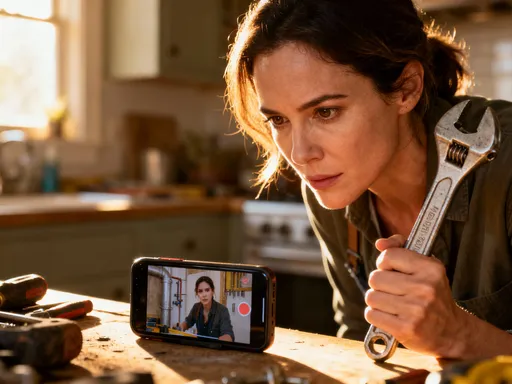
That’s where video tutorials come in—not as entertainment, but as quiet teachers. Imagine you’re standing in your kitchen, staring at a leaky faucet. Instead of panicking or waiting for the weekend to call a plumber, you pull out your phone and search for “how to replace a bathroom faucet cartridge.” You find a five-minute video with clear close-ups and simple narration. You watch the first minute, pause, grab your toolbox, and try the first step. It takes a few tries, but you get it. You go back, watch the next part, and keep going. An hour later, the water’s not dripping anymore. And more than that—you feel a quiet swell of pride. Not because you saved $75 on a repair bill, but because you proved something to yourself: I can figure this out.
These moments matter. They build what I like to call “everyday confidence”—the kind that doesn’t come from grand achievements, but from small, repeated acts of competence. And the more you do it, the more you start to see your home not as a list of problems, but as a place where you’re constantly growing. You start noticing other things you’ve been avoiding—hanging shelves, changing air filters, organizing the pantry. And instead of dreading them, you think, Maybe I can learn that. That shift—from avoidance to curiosity—is where real independence begins.
Supporting Teens’ Independence with Guided Learning
If you’re a parent, you know that moment when you realize your child is growing up faster than you expected. One day they’re asking you how to tie their shoes, the next they’re applying for college jobs. And with that growth comes a quiet worry: Are they ready? Do they know how to handle the real world? We want them to be independent, but we also don’t want them to feel alone in figuring it out.
Here’s a secret: they don’t need long lectures or nagging reminders. What they need is access to clear, judgment-free guidance. And that’s exactly what video tutorials can offer. Think about a teenager trying to change a flat bike tire for the first time. If you stand over them and give instructions, it might feel like pressure. But if they watch a step-by-step video on their own, they can pause, rewind, and try again without feeling watched. They learn at their own pace. They build problem-solving skills, not just bike repair skills.
The same goes for things like organizing schoolwork, packing a lunch, or even doing laundry. These aren’t just chores—they’re life skills. And when teens learn them through guided videos, they’re not just following steps. They’re learning how to learn. They’re building the habit of turning to reliable resources when they don’t know something. That’s a skill that will serve them long after they leave home. And as a parent, you get to step back—not because you’re disengaged, but because you’ve given them the tools to move forward on their own. That’s not letting go. That’s empowering.
Building Confidence After a Life Change
Life has a way of throwing curveballs. You move to a new city. You recover from an injury. You lose a job. In moments like these, even simple tasks can feel overwhelming. You might find yourself relying on others more than you’d like—asking your neighbor to help carry groceries, calling your sister to set up your new phone, or waiting for a friend to show you how to use the local bus system. There’s no shame in asking for help. But over time, dependence can wear down your sense of self. You start to wonder: Can I do anything on my own anymore?
This is where video tutorials can be quietly transformative. They don’t replace human connection. But they do offer something else: agency. When you’re rebuilding your life, even small wins matter. Imagine arriving in a new apartment with a box of unassembled furniture. Instead of waiting days for help, you search for “how to assemble an IKEA bed frame” and find a clear, well-lit video. You follow along step by step. It takes time. You make a mistake. You backtrack. But eventually, the frame stands. And with it, so do you.
Each task you complete on your own becomes proof of your resilience. Cooking your first solo meal. Setting up your Wi-Fi. Filling out an online form. These aren’t just practical skills—they’re emotional milestones. And video tutorials make them accessible. No rush. No judgment. Just you, your phone, and the freedom to try, fail, and try again. In the process, you’re not just learning how to do things. You’re relearning who you are: someone who can adapt, grow, and thrive—even after life shakes you.
Staying Sharp as We Age
Now let’s talk about another stage of life that’s often overlooked: growing older with purpose. For many women in their 50s, 60s, and beyond, independence isn’t just a goal—it’s a value. It’s about being able to manage your own life, make your own choices, and stay connected to the world on your terms. But as we age, some things get harder. Your eyes might not see as clearly. Your hands might not move as quickly. And new technology can feel intimidating.
That’s where video tutorials shine. They’re patient. They’re repeatable. They don’t get frustrated if you need to watch the same part five times. Whether you’re learning how to use FaceTime to see your grandchildren, set up two-factor authentication for online banking, or try a new watercolor technique, these videos meet you where you are. You can watch in the morning with your coffee. Pause to rest. Come back later. There’s no test. No deadline. Just progress at your own pace.
And the benefits go beyond the skill itself. Every time you learn something new, you send a message to your brain: You’re still capable. You’re still growing. Studies show that continued learning helps maintain cognitive function and emotional well-being. But you don’t need a study to feel it. You feel it when you successfully send your first video message. When you book a doctor’s appointment online. When you try a new recipe from a cooking video and it actually turns out. These moments keep you engaged, connected, and confident. They remind you that aging isn’t about slowing down—it’s about choosing how you move forward.
Learning That Fits Into Real Life
One of the most beautiful things about video tutorials is their flexibility. They don’t require a classroom. You don’t need to sit still for an hour. You don’t have to wear special clothes or sign up for a semester. Learning can happen in the in-between moments: while the laundry spins, during a child’s soccer practice, or while waiting for the oven to preheat. A two-minute clip on how to tie a scarf. A quick guide to using a food processor. A five-minute walkthrough of a new app. These micro-moments add up.
Think of it like watering a plant. You wouldn’t pour an entire bucket of water at once and expect it to thrive. You give it a little each day. The same is true for learning. Consistency matters more than intensity. And because these videos are short, accessible, and easy to revisit, they fit into the rhythm of real life. You don’t have to “find time.” You just use the time you already have.
The key is intention. Instead of scrolling mindlessly, ask yourself: What’s one small thing I’d like to learn this week? Maybe it’s how to organize your email inbox. Or how to use voice commands on your phone. Or how to make a basic repair to your vacuum cleaner. Search for a clear, trustworthy video. Watch it once. Try it. Come back if you forget. Over time, you’ll notice something: you’re not just learning skills. You’re building a mindset. You’re becoming someone who sees challenges as opportunities to grow, not obstacles to avoid. And that mindset is contagious. It spills over into other areas of your life—your relationships, your work, your sense of self.
From Passive Watching to Active Growing
Let’s talk about the biggest shift of all: from passive watching to active growing. We’ve all spent hours scrolling through videos without really learning anything. It feels like time slipping away. But what if we changed our relationship with these platforms? What if, instead of using them just to relax or escape, we used them to grow?
It starts with a simple mindset shift. Instead of thinking, I’ll watch this when I have time, try thinking, I’ll make time to learn this. Save videos you want to come back to. Create a playlist called “Things I Want to Learn.” Watch a little, try a little, repeat. Celebrate small wins. Did you finally figure out how to use the timer on your oven? That counts. Did you follow a video to organize your spice rack? That’s a win. These moments build momentum.
And over time, you’ll notice a deeper change. You’ll feel less overwhelmed by new things. You’ll be quicker to try, slower to give up. You’ll start to see yourself as someone who learns—not perfectly, but steadily. That’s the quiet power of using technology with purpose. It’s not about becoming a DIY expert or a tech wizard. It’s about feeling a little more capable, a little more in control, a little more like the strong, resourceful woman you know you are.
So the next time you feel stuck—when you’re staring at a broken shelf, a confusing gadget, or a new phase of life—don’t wait for permission to learn. Pick up your phone. Find a clear video. Press play. Take one step. Then another. Because independence isn’t something you’re given. It’s something you build—quietly, steadily, one small lesson at a time. And the tools to build it? They’re already in your hand.